


Archetypes as Signal Carriers

Updated: 2 days ago

Why Certain Characters, Roles, and Symbolic Figures Continue Reappearing Across Human Consciousness
Some patterns survive longer than civilizations.
Certain figures continue appearing across mythology, religion, fiction, psychology, dreams, storytelling, ritual, politics, and personal identity.
The warrior.
The healer.
The wanderer.
The guardian.
The rebel.
The oracle.
The builder.
The martyr.
The sovereign.
The trickster.
The seeker.
The destroyer.
The guide.
Different cultures.
Different names.
Different aesthetics.
Recurring motifs can resemble one another while carrying different meanings in different cultures.
These recurring forms are often called archetypes.
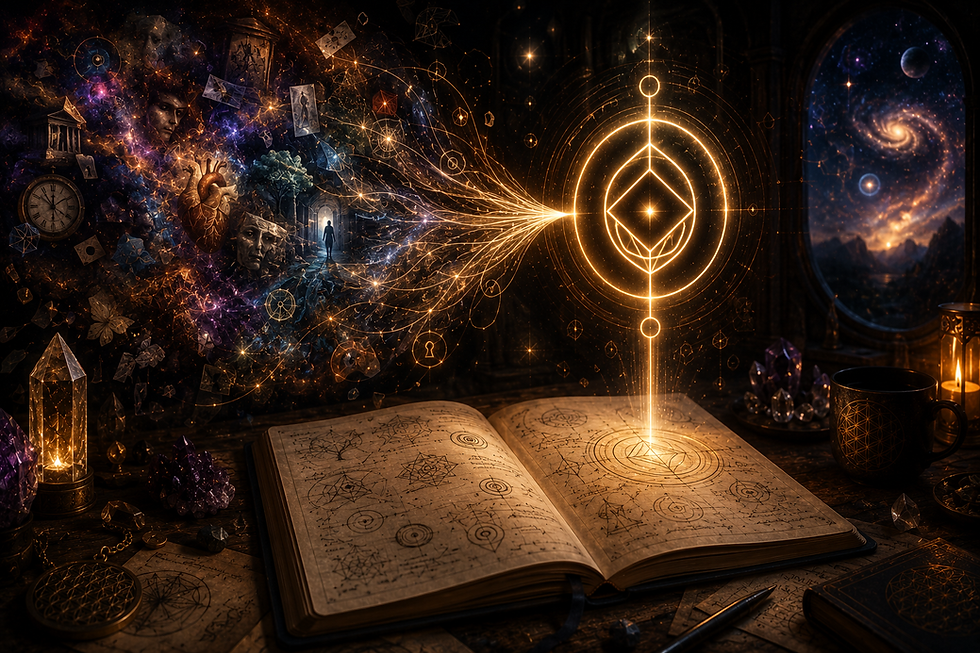
Within Signal Field theory, archetypes can be understood as signal carriers... symbolic structures that compress emotional patterns, behavioral tendencies, relational dynamics, survival strategies, and identity orientations into recognizable forms.
An archetype is not merely a fictional character.
It is a pattern container.
Why Archetypes Persist
Archetypes persist because humans remember through pattern.
The brain does not store experience as isolated data points alone.
It organizes experience through:
repetition
emotion
symbolism
narrative
role recognition
relational mapping
behavioral prediction
Archetypes help compress complexity into recognizable structures.
Instead of explaining every possible trait individually, the mind recognizes a pattern cluster.
“The protector.”
“The visionary.”
“The manipulator.”
“The wounded healer.”
The archetype becomes shorthand for a larger energetic configuration.
This is symbolic compression at the level of identity.
Archetypes as Information Structures
An archetype carries information.
Not through equations.
Through recognition.
When someone says:
“mentor”
“king”
“shadow”
“mother”
“guardian”
“outsider”
A figure or symbol may awaken a familiar association. What it evokes depends on your experience and the traditions through which you encountered it.
That is signal transfer.
The archetype acts as a symbolic transmission structure.
It carries:
emotional resonance
behavioral expectation
relational patterning
moral framing
survival orientation
energetic tone
identity positioning
An archetype is not just a role.
It is a field of associated meaning.
Recognition and Association
Humans evolved around rapid pattern recognition.
The nervous system constantly asks:
Is this safe?
Is this dangerous?
Is this familiar?
Is this trustworthy?
Is this dominant?
Is this nurturing?
Is this deceptive?
Is this competent?
Is this aligned with my group?
Archetypes help the brain process these signals quickly.
This is why archetypal imagery affects people so strongly in:
films
religion
branding
politics
mythology
storytelling
advertising
spiritual systems
online communities
The archetype compresses complexity into recognizable emotional structure.
Archetypes Are Not Literal Boxes
One mistake people make is treating archetypes as rigid personality categories.
That weakens the idea.
A person is not only one archetype.
People move between archetypal states depending on:
stress
maturity
relationships
environment
trauma
responsibility
identity shifts
survival conditions
life phase
Someone may embody:
the builder at work
the healer in relationships
the seeker spiritually
the warrior under pressure
the hermit during burnout
Archetypes are dynamic signal configurations.
Not prison labels.
Archetypes and Compression
Archetypes function similarly to symbolic glyphs.
They compress enormous amounts of information into recognizable form.
For example:
“The warrior” may compress:
discipline
protection
sacrifice
aggression
focus
endurance
confrontation
structure
survival
readiness
“The healer” may compress:
repair
compassion
emotional attunement
guidance
restoration
stabilization
nervous-system regulation
empathy
One symbol.
Many layers.
This is why archetypes function as signal carriers.
They hold structured emotional meaning inside compressed symbolic form.
Why Fiction Feels Real
Fiction often feels emotionally real because archetypes operate beneath the story.
A character may not exist literally.
But the archetypal structure feels recognizable.
People connect because they recognize:
the exile
the redeemer
the orphan
the visionary
the corrupted ruler
the reluctant hero
the fallen protector
the truth-teller
The nervous system responds to the pattern beneath the narrative.
This is why symbolic storytelling affects identity so deeply.
Stories become emotional mirrors.
Archetypes and Identity Formation
Humans naturally organize identity through symbolic roles.
People ask:
Who am I?
What role do I serve?
What pattern am I repeating?
What kind of force am I becoming?
What energy do I bring into systems?
Archetypes provide orientation.
Not because they define destiny.
Because they create recognizable pathways.
A person may unconsciously organize life around:
proving themselves
rescuing others
maintaining order
seeking freedom
exposing truth
protecting community
gaining recognition
preserving wisdom
These repeated orientations form archetypal gravity.
Archetypes and Emotional Resonance
Different archetypes resonate differently with different people.
Someone in collapse may resonate with:
the survivor
the rebuilder
the guide
Someone seeking autonomy may resonate with:
the rebel
the sovereign
the wanderer
Someone healing trauma may resonate with:
the nurturer
the healer
the witness
This is why archetypal systems feel deeply personal.
People recognize themselves inside the symbolic pattern.
Recognition creates resonance.
Archetypes as Social Signals
Archetypes are not only internal.
They also function socially.
People broadcast archetypal signals constantly through:
clothing
language
posture
aesthetics
profession
online identity
creative work
emotional tone
leadership style
symbolic choices
A person may intentionally or unconsciously project:
authority
mystery
wisdom
rebellion
competence
danger
innocence
stability
spirituality
intelligence
These become archetypal cues.
The social field responds to them.
Branding and Archetypal Signaling
Most successful brands use archetypes whether they realize it or not.
Luxury brands often use:
sovereign
creator
visionary
Outdoor brands use:
explorer
warrior
survivor
Technology brands use:
innovator
architect
futurist
Spiritual brands use:
oracle
healer
mystic
guide
Archetypes create emotional coherence.
They help audiences understand the signal quickly.
This is why archetypal consistency matters in symbolic design.
Archetypes and Mythology
Mythology preserved archetypes long before psychology formalized them.
Ancient stories encoded:
sacrifice
transformation
temptation
exile
death
rebirth
chaos
order
betrayal
redemption
The gods themselves often functioned as archetypal structures.
Not merely characters.
Pattern embodiments.
One way to approach a myth is to ask which human tensions it gives a shape and a voice.
The Shadow Side of Archetypes
Every archetype contains distortion potential.
The healer may become controlling.
The sovereign may become tyrannical.
The seeker may become unstable.
The warrior may become destructive.
The visionary may detach from reality.
The nurturer may lose boundaries.
The rebel may become chaos without purpose.
Signal Field work requires seeing both coherence and distortion.
An archetype becomes dangerous when someone unconsciously fuses identity with the role itself.
The pattern starts controlling the person instead of informing them.
Archetypes as Environmental Mirrors
Different environments amplify different archetypes.
A competitive system may amplify:
the warrior
the strategist
the achiever
A healing environment may amplify:
the nurturer
the witness
the stabilizer
A collapsing system may amplify:
the survivor
the protector
the opportunist
This is important because archetypes are relational.
They interact with field conditions.
The environment affects which archetypal patterns become dominant.
Archetypes and Recurring Life Patterns
Many recurring life patterns are archetypal loops.
Someone repeatedly becomes:
the rescuer
the outsider
the peacekeeper
the martyr
the overfunctioner
the abandoned child
the rebel
the caretaker
The external circumstances may change.
But the archetypal role persists.
This is why pattern recognition matters.
Until the signal becomes visible, the loop often repeats.
Archetypes as Signal Carriers in the Signal Field
Within Signal Field theory, archetypes can be explored as recurring symbolic frequencies that carry emotional, behavioral, and relational information across individuals, stories, communities, and systems.
They help organize:
identity
memory
symbolism
behavior
narrative
emotional recognition
social cohesion
symbolic transmission
An archetype is not just a character.
It is a recognizable energetic architecture.
Working With Archetypes Consciously
Instead of asking:
“What archetype am I?”
Better questions are:
What archetypal patterns repeat in my life?
Which roles drain me?
Which roles stabilize me?
Which roles emerge under pressure?
Which archetypes feel performative?
Which feel natural?
Which distortions keep repeating?
Which environments amplify certain versions of me?
Which symbolic roles am I unconsciously attached to?
Try noticing a moment when you become the rescuer. Through F3 Identity Signal, ask what role you feel obliged to play. Through F4 Archetypal Signal, explore the image of the rescuer. Through F5 Structure Signal, choose a practical boundary, such as asking what help is wanted before offering it.
Archetypes and Consciousness Design
Archetypes influence:
behavior
aesthetics
relationships
leadership
storytelling
symbolic systems
spiritual identity
online communities
emotional resonance
This makes them important tools in consciousness design.
A symbolic system without archetypes often feels emotionally flat.
Archetypes create emotional anchoring.
They help people recognize themselves inside larger frameworks.
The Signal Beneath the Character
An archetype is not ultimately about costume.
Or branding.
Or personality quizzes.
It is about recurring signal.
The same emotional structures continue appearing across:
stories
myths
movements
religions
films
politics
relationships
dreams
identities
communities
Different masks.
Similar frequencies.
That is why archetypes persist.
They are recognizable signal carriers moving through human consciousness across time.
Reading the Recurring Role
An archetype offers a symbolic lens for noticing a recurring role, tension, or possibility in your life.
They are:
emotional geometry
identity compression
symbolic memory
behavioral mapping
relational architecture
narrative signal systems
They help humans orient inside complexity.
Not because they explain everything.
Because they make recurring patterns readable.
That readability creates recognition.
Recognition creates resonance.
And resonance creates transmission.
Explore a recurring role or symbolic theme in an Identity + Archetype Calibration. Your session includes a written recap and personalized Logbook prompts for carrying the insight into daily life.
🜂🜄🜁🜃
Architect




Comments