


One Day in the Logbook: Morning, Midday, and Evening

Updated: 1 day ago

A day rarely arrives as one clear pattern. A quiet morning can become a crowded afternoon, and the story you tell at lunch may look different by evening. The Logbook gives those moments a place beside one another.
This fictional example follows Alex through three pauses using the Version 3 Logbook. Morning, midday, and evening are optional checkpoints; one useful entry is enough when that is what the day allows.
Morning: set the signal

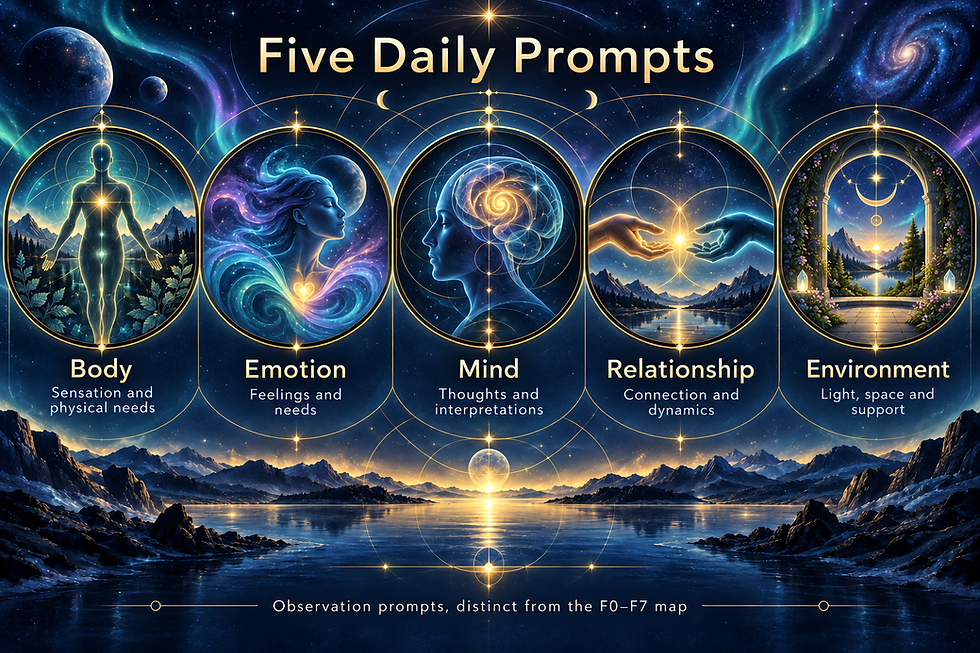
At 8:10 a.m., before opening messages, Alex uses Daily Observation on page 4.
Body signal: Tired eyes after a late night.
Emotional tone: Apprehensive about a crowded schedule.
Mental loop: “I need to prove I can handle everything.”
Relational signal: No new request has arrived yet.
Environmental influence: Four meetings and an unfinished report.
Alex writes “limited capacity” as the word for the moment. The first useful action is practical: mark one available work block on the calendar. Setting the signal means noticing the starting conditions and choosing an intention that can meet the day as it unfolds.
Try this pause: describe what is present before predicting what it means. Add one small intention that fits your actual time and energy. Leave the active layer blank if you are unsure.
Midday: locate the layer

At 12:40 p.m., a colleague asks Alex to take an additional task. Alex starts typing “Of course,” then pauses. The new observation is an urge to agree before checking capacity. The interpretation is “If I say no, I will seem unreliable.” The colleague has asked a question; they have not said that refusing would make Alex unreliable.
F3 Identity is the useful lens for the familiar role of always being available. F5 Structure also matters because the schedule has no spare work block. Alex chooses the F3 worksheet rather than trying to complete every layer. The question is whether reliability could include giving an accurate answer about capacity.
Alex replies: “I can take this tomorrow afternoon. If it needs to happen today, which existing task should move?” The colleague has not answered yet. Alex records the request and the uncertainty, without calling the exchange a success or a failure.
Try this pause: add what changed since your first entry. Separate the observed event, your interpretation, and the action available now. Choose the layer that gives you a useful question, not a permanent label.
Evening: integrate the pattern

At 7:15 p.m., Alex turns to Daily Integration on page 5.
Available energy: 2/5.
Felt steadiness: 3/5. These are personal descriptions, not grades.
Dominant pattern: Agreeing quickly to protect an image of being dependable.
What shifted the state: taking a lunch break and asking about priorities created some breathing room. Supportive action: Alex waited for an answer instead of quietly absorbing the extra task. The colleague agreed that tomorrow was workable, but the original report remains unfinished.
Intention for tomorrow: check the calendar before accepting a new request. Closing line: “An honest limit belongs in the plan.” The day ends with something learned and something still open. Alex does not need to rewrite the morning or produce a perfect resolution.
Carry one thread forward
Compare the three pauses: what stayed the same, what changed, and what remains unknown? Keep the original notes visible. Record changes without assuming which one caused another. Across these small returns, a thread of becoming begins to show.
If the same question returns, bring it to the Weekly Pattern Review on page 16. Record what repeated, what supported you, what you are still learning, and one experiment for next week. If three check-ins feel cumbersome, use the next available pause. The page is there to support attention, not create another obligation.
🜂🜄🜁🜃 Architect




Comments