


Signal Stabilization

Updated: 1 day ago

Finding Support, Rhythm, and Room Within a Noisy World
Modern life does not simply inform us.
It stimulates us.
Every day, the human system moves through overlapping signal environments: digital notifications, emotional conversations, social comparison, algorithmic pressure, breaking news, symbolic conflict, work stress, financial pressure, relational tension, and the constant demand to stay responsive.
At first, this may feel normal.
Over time, you may notice changes.
Attention fragments.
The body may feel tense or restless.
Rest becomes harder.
Emotions become sharper or flatter.
A small disruption can arrive on top of a much larger load.
The mind starts scanning for problems even when nothing immediate is wrong.
Signal Stabilization is a practice within Signal Field theory: finding enough support and room to meet the next moment. It belongs to everyday reflection, not a clinical measure of how regulated a person is.
Stabilization is not emotional numbness.
It is not pretending everything is fine.
It is not forcing calm while the body is overloaded.
Look for what is asking too much, what could become more accessible, and where another person or a change in conditions could help.
What Is Signal Destabilization?
Signal destabilization names the experience of feeling crowded or unsettled by demands.
This pressure can come from many sources:
emotional overload
digital overstimulation
chronic stress
grief and loss
constant social comparison
fear-based media
symbolic conflict
relational instability
identity pressure
lack of rest
environmental chaos
Destabilization does not always look dramatic.
Sometimes it looks like irritability.
Sometimes it looks like numbness.
Sometimes it looks like endless scrolling, avoidance, overthinking, sleep disruption, emotional shutdown, or feeling detached from your own life.
You may still be getting things done while the effort becomes harder to sustain.
Visible performance can hide the cost.
Coherence Is Not Perfection
Signal Field theory does not define coherence as constant peace.
A coherent person still feels anger.
A coherent person still grieves.
A coherent person still gets overwhelmed.
A coherent person still has difficult days.
Coherence offers an image of connection, even when the thread feels faint.
It can include tears, stimming, movement, a pause, or a request for help.
Overwhelm does not cancel your place in the field.
Neither does needing someone else to help you find a next step.
Coherence is not the absence of disruption.
It is an invitation to return, with support and in your own time.
Why Modern Systems Destabilize Us
Many modern systems are built around activation.
Digital platforms reward attention capture.
Media cycles reward emotional urgency.
Social systems reward performance.
Algorithms reward reaction.
Consumer culture rewards dissatisfaction.
Conflict cycles reward escalation.
An urgent message can pull us toward another action:
clicking
reacting
arguing
consuming
comparing
refreshing
This creates a constant loop of external signal pressure.
Repeated interruptions can make it difficult to find uninterrupted space.
Stillness may feel welcome, uncomfortable, or simply unavailable.
Ask which inputs can be changed and which demands require shared help.
The Nervous System as Signal Infrastructure
The nervous system is one of the primary infrastructures of human perception.
It processes:
sound
light
movement
tone of voice
social cues
emotional tension
threat signals
environmental stimulation
bodily sensation
symbolic imagery
digital input
Stress can affect the body, attention, and daily life. [1]
The experience differs between people and circumstances.
Changes someone might notice include:
urgency
defensiveness
racing thoughts
rigid interpretation
emotional reactivity
exhaustion
difficulty focusing
difficulty trusting one’s own perception
These experiences deserve care and context.
Feeling settled does not guarantee accuracy, and distress does not make a concern false.
Stabilization Begins With Recognition
Recognition can be one place to begin.
Support can also come before you understand what is happening.
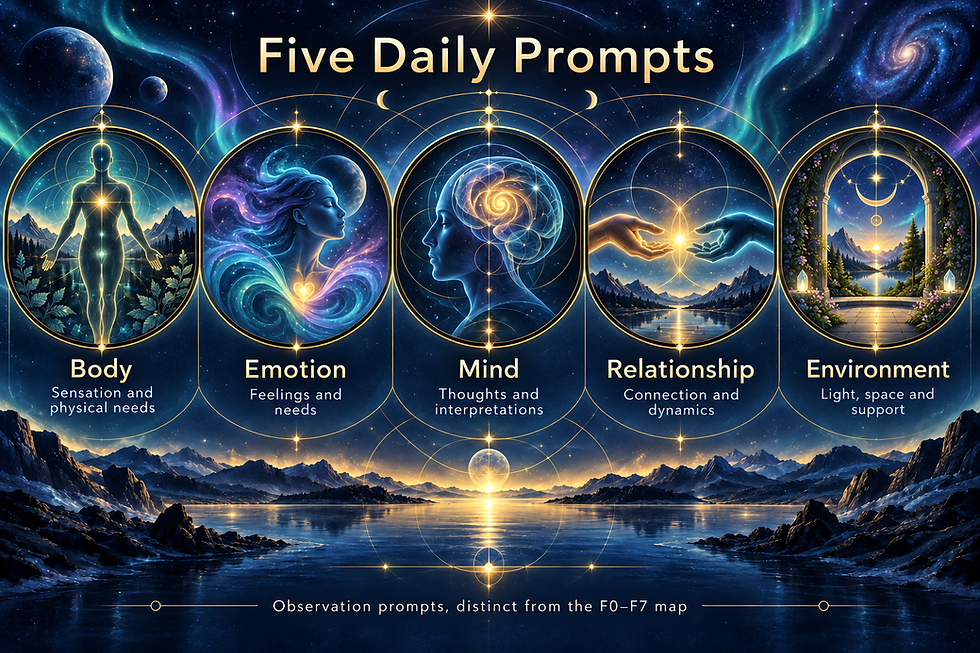
We can ask:
What repeatedly pulls me out of coherence?
What environments make my body tighten?
What conversations leave me fragmented?
What digital patterns drain my attention?
What emotional loops keep repeating?
Which demands can I change, and where do I need help?
These questions are not about blame.
They are about mapping.
You do not have to map the whole pattern before receiving care.
Signal Load and Internal Capacity
What a person can manage is not a fixed quantity.
That capacity changes depending on:
sleep
stress
grief
physical health
emotional safety
relational stability
workload
environmental pressure
unresolved trauma
available support and access
A signal that feels manageable one day may feel overwhelming another day because the system’s capacity has changed.
Let current capacity guide the size of the next step.
Sometimes the most coherent action is not pushing harder.
Sometimes it is reducing input.
Sometimes it is stepping back from stimulation long enough for the system to regain interpretive space.
The Right to Step Back
A boundary, a quieter setting, or time away may be exactly what is needed.
Needing less input is not fragility. Participation can take many forms.
Ask what kind of contact is sustainable and what can wait.
With enough support, you may find more room to:
pause a difficult conversation or ask to continue in writing
receive information in smaller pieces
feel emotion with company or privacy as needed
check an interpretation with someone you trust
name a boundary under pressure
choose a response, including no immediate response
Stepping back can be part of staying connected to your needs.
Returning does not have a deadline.
Emotional Regulation vs Emotional Suppression
A major misunderstanding around stabilization is the idea that being stable means not feeling.
That is suppression, not coherence.
You may hide a feeling to meet a demand or stay safe.
Giving a feeling room can involve expression, privacy, movement, rest, or help. No single form is required.
Notice experiences such as the following without assuming they all come from suppressed emotion:
tension
fatigue
numbness
resentment
emotional flooding
compulsive reaction
burnout
Emotion can offer information about experience.
Explore what matters, what hurts, and what needs attention while leaving room to check an interpretation.
Signal Stabilization does not silence emotion.
It gives emotion structure.
Environmental Stabilization
The environment is part of the field.
Lighting, sound, temperature, visual input, and social demands belong in the support picture.
An environment that overwhelms one person may suit another.
Look for fit rather than an ideal-looking space.
This does not mean every space has to become perfect.
It means the environment should not constantly work against the nervous system.
If available and useful, you might try:
clearing one area
lowering noise
reducing notifications
adjusting light to a comfortable level
creating a quiet corner
using grounding objects
removing unnecessary visual clutter
setting intentional digital boundaries
Your surroundings belong to the field of care.
Attention as Architecture
Attention is not passive.
Notice the patterns your attention keeps returning to.
Repeated exposure to upsetting material may be one demand among many.
A familiar place, meaningful activity, or trusted relationship may offer a different quality of contact.
This does not mean ignoring reality.
It means refusing to let the loudest signals become the architects of perception.
Signal Stabilization asks:
What holds my attention, and what support would help me shift it when I want to?
A Rhythm You Can Live With
A familiar rhythm may offer a useful anchor.
Sleep rhythms.
Breathing rhythms.
Eating rhythms.
Movement rhythms.
Work and rest rhythms.
Social rhythms.
Reflection rhythms.
During difficult periods, routines may become less accessible.
You might notice:
irregular sleep
inconsistent meals
scattered focus
compulsive scrolling
emotional swings
difficulty transitioning between tasks
Let predictability be a support rather than another obligation.
Stabilization does not always begin with deep philosophy.
Sometimes it begins with help meeting an ordinary need.
When Support Needs a Different Shape
For ADHD, autistic, and AuDHD readers, a workable day may include movement, stimming, familiar sound, written communication, or help with transitions. Choose supports with the person rather than treating stillness or eye contact as signs of success.
Grief and burnout may leave less room for even a gentle practice. You can ask someone to bring food, reduce a demand, or help compose one message. Belonging does not depend on being responsive.
Try one question: what would make the next hour a little more manageable? A one-word answer is enough, and no written answer is required.
Practical Signal Stabilization
Signal Stabilization can be practiced through simple, repeatable actions.
These may include:
reducing digital overstimulation
creating a morning or evening rhythm
journaling recurring emotional patterns
naming what is activating the body
spending time in quiet environments
taking breaks from reactive media
organizing physical space
moving with sound, silence, or sensory supports that suit you
trying comfortable breathing only if it helps
limiting unnecessary conflict exposure
tracking what restores clarity
beginning with whichever sensation, thought, need, or circumstance you can notice
The power is not in dramatic intensity.
A practice is useful when it serves you.
If inward attention or breathing increases distress, stop or adapt it. Looking around, moving, or contacting someone may fit better. [2]
Burnout as Signal Collapse
Persistent exhaustion can call for more than a new routine.
Work demands, masking, sensory load, grief, health, and available support may all belong in the picture.
Someone may describe:
motivation collapses
emotional range narrows
attention fragments
the body feels heavy
identity feels reduced to survival
meaning becomes harder to access
Burnout is not just tiredness.
Signal collapse is an image for changed access to capacity.
It does not identify a single medical mechanism or diagnosis.
This is why burnout cannot always be solved by productivity hacks.
Reducing demands, accommodations, practical help, and appropriate health care may matter more than an individual exercise.
Stabilization Before Expansion
The wish for a fresh beginning can arrive in the middle of exhaustion.
They want transformation, growth, reinvention, purpose, clarity, creativity, or spiritual breakthrough while the system is still overloaded.
A demanding transformation plan may become another burden.
You are allowed to begin smaller.
Signal Field theory treats stabilization as foundational.
Meet the immediate need without requiring a breakthrough.
Meaning can remain present while growth waits.
Coherence Under Pressure
Pressure reveals something about conditions as well as personal resources.
It is not an examination of whether you can stay intact.
What happens when conflict appears?
What happens when uncertainty rises?
What happens when grief returns?
What happens when old patterns activate?
What happens when the environment becomes noisy?
Let the answer guide the support, boundary, or change in conditions that is needed.
When a Practice Is Not Enough
Persistent or severe symptoms, or a marked change in everyday functioning, deserve professional attention. These reflections can sit alongside care and accommodations; they cannot determine the cause of a change. [3]
The Larger Philosophy
Signal Stabilization is not about escaping the world.
It is about learning how to remain coherent inside it.
Modern systems will continue competing for attention, emotion, identity, and nervous-system bandwidth.
Those pressures should not become a verdict on the person carrying them.
With support, there may be more room.
It can pause.
Notice.
Choose.
Return.
Within Aurora Continuum, a return can be small: a meal, a message, a quieter room, a hand offered without a demand.
You do not have to become still to belong.
The thread can be held together.
🜂🜄🜁🜃
Architect






Comments