


Why Symbolic Language Matters

Updated: 1 day ago

Meaning, Compression, and the Architecture of Human Perception
Human beings do not experience reality through raw information alone.
We experience reality through interpretation.
Language, imagery, emotion, memory, stories, rituals, metaphors, architecture, music, mythology, and symbols all shape how human beings organize meaning inside consciousness.
Long before modern science, psychology, or digital systems existed, human civilizations communicated through symbolic structures:
cave paintings
myths
sacred geometry
religious iconography
tribal markings
flags
ceremonial objects
archetypal stories
encoded visual systems
Symbolic language emerged because some forms of meaning are difficult to communicate directly through literal explanation alone.
A symbol compresses complexity into recognizable form.
Signal Field theory explores symbolic language as a system of pattern transmission... a way human beings encode, preserve, reinforce, and interact with meaning across time.
Symbols Are Compression Devices
A single symbol can carry layers of:
emotional meaning
historical memory
identity
social belonging
spiritual association
psychological resonance
cultural reinforcement
For example:
a national flag
a religious cross
a corporate logo
a wedding ring
a skull
a spiral
a crown
a serpent
a geometric pattern
These images are not experienced as “just shapes.”
People react emotionally to them because symbols store associative meaning.
The symbol becomes a compressed carrier for much larger psychological and cultural structures.
Within Signal Field theory, symbolic language is understood as a form of information compression inside human perception.
Human Consciousness Thinks Symbolically
Even modern thought is deeply symbolic.
People think through:
metaphor
narrative
visual association
emotional imagery
archetypes
symbolic memory
Dreams themselves are highly symbolic.
The unconscious mind rarely communicates through strict literalism.
Instead, it tends to organize experience through:
recurring imagery
emotional symbolism
narrative fragments
symbolic relationships
spatial metaphors
environmental representation
For one dreamer, a collapsing building may evoke instability.
A flood may bring an association with overwhelm.
A doorway may suggest transition. Begin with your own associations; these images carry no single fixed meaning.
Symbolic interpretation is not irrational.
It is one of the primary ways human consciousness organizes complex internal experience.
Symbolic Systems Shape Civilization
Every civilization uses symbolic infrastructure.
Governments use:
flags
monuments
architecture
ceremonial imagery
national mythology
Religions use:
sacred geometry
icons
ritual objects
symbolic narratives
archetypal figures
Corporations use:
branding
logos
color psychology
visual identity systems
Digital culture uses:
memes
emojis
avatars
interface symbolism
viral imagery
Even modern “rational” societies rely heavily on symbolic reinforcement.
Human systems cannot function through data alone.
People need meaning structures.
Why Symbols Carry Emotional Power
Symbols gain strength through repetition and emotional association.
A symbol repeatedly linked to:
fear
belonging
love
grief
identity
purpose
transcendence
danger
authority
begins generating emotional response automatically.
Over time, the nervous system responds to the symbol before conscious analysis fully occurs.
This is why symbols can:
unify groups
trigger conflict
stabilize identity
manipulate perception
reinforce belief
preserve cultural continuity
Symbolic language bypasses purely analytical processing and interacts directly with emotional and associative systems.
Symbolic Resonance
Within Signal Field theory, symbolic resonance refers to the interaction between symbols and human perception.
Some symbols feel personally meaningful even when their meaning is difficult to explain rationally.
Others feel emotionally charged because they connect to:
memory
identity
cultural conditioning
archetypal structures
collective association
personal experience
Its influence emerges through:
recognition
repetition
emotional reinforcement
narrative association
social meaning
psychological imprinting
Symbolic resonance is the process through which meaning becomes emotionally active inside the system.
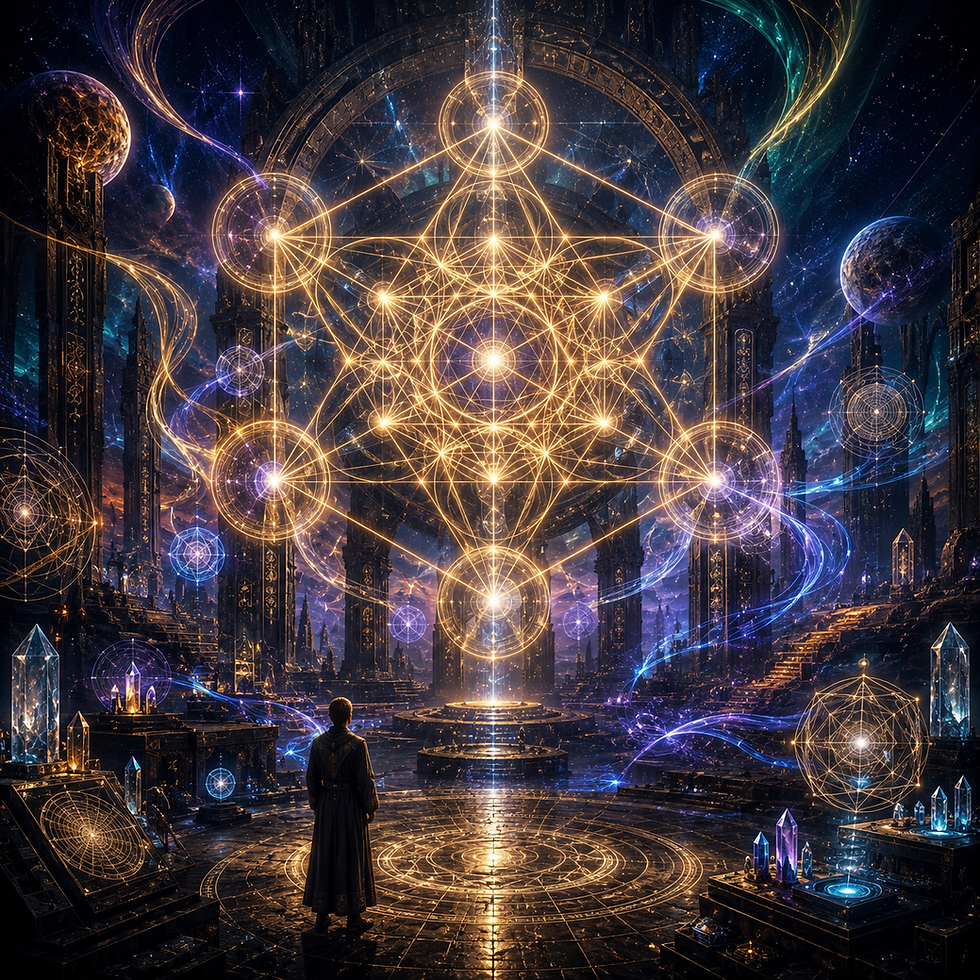
Sacred Geometry and Structural Recognition
Certain geometric forms appear repeatedly throughout:
nature
biology
architecture
astronomy
art
religious symbolism
mathematical systems
Circles.
Spirals.
Hexagonal structures.
Fractals.
Symmetry.
Waveforms.
Human beings often experience these structures as aesthetically or symbolically meaningful because consciousness itself appears highly sensitive to pattern recognition.
Signal Field theory explores sacred geometry as a symbolic reflection of recurring organizational principles appearing throughout natural systems.
Geometry becomes both structural and symbolic simultaneously.
Symbolic Language and Memory
Symbols preserve continuity across time.
Entire civilizations can transmit:
values
myths
warnings
identity
emotional memory
cultural structure
through symbolic systems.
Stories survive longer than raw data.
Myths survive longer than statistics.
Images survive longer than instruction manuals.
Symbolic language acts like a continuity mechanism for human meaning structures.
Modern Symbolic Overload
Modern people are exposed to symbolic systems constantly.
Advertisements.
Political branding.
Algorithmic imagery.
Celebrity iconography.
Digital identities.
Online narratives.
Status symbols.
Media framing.
Most people underestimate how much symbolic exposure shapes:
attention
identity
desire
emotional response
worldview
perceived reality
Modern symbolic systems are highly engineered.
Attention itself has become a symbolic battlefield.
A Living Language of Pattern
Signal, resonance, spiral, and archive give recurring experiences a form we can return to.
Symbolic language can hold several meanings at once, letting an image open what a literal explanation leaves unfinished.
Terms like:
Signal
Resonance
The Spiral
The Archive
Aurora Continuum
Distortion
Coherence
Nested Realities
are symbolic-operational concepts.
They function simultaneously as:
metaphors
frameworks
perception tools
organizational structures
interpretive models
The goal is not replacing reality with symbolism.
The goal is creating symbolic language capable of mapping experiences that are often emotionally, psychologically, and structurally complex.
Between Literalism and Meaning
Modern culture often swings between two extremes:
hyper-literal reductionism
ungrounded mystical projection
Signal Field theory attempts to occupy the space between them.
A symbol invites a reading.
Its meaning deepens through personal experience, cultural context, and the question we bring to it.
Symbolic systems matter because human consciousness itself appears fundamentally symbolic in how it organizes meaning.
Why Symbolic Language Matters
Symbolic language matters because human beings require more than information.
They require:
meaning
orientation
continuity
emotional coherence
identity structure
narrative integration
recognizable patterns
Without symbolic structure, information becomes fragmented and psychologically weightless.
Symbols help human systems:
stabilize memory
organize complexity
transmit meaning
preserve continuity
navigate uncertainty
recognize deeper patterns
At its highest level, symbolic language becomes a bridge between:
emotion and structure
memory and identity
perception and meaning
individual experience and collective continuity
Signal Field theory explores symbolic language as part of a larger effort to understand how consciousness organizes reality through resonance, recognition, and patterned interaction.
Not as rigid doctrine.
But as an evolving architecture of meaning.
🜂🜄🜁🜃
Architect





Comments